Ceiling & Water Leak Repair Denver
A brown ring or bubbling paint on a ceiling almost always means water sat in the cavity above it. Ceiling leak repair separates into two questions: where the water enters, and what it damaged on the way down. In…
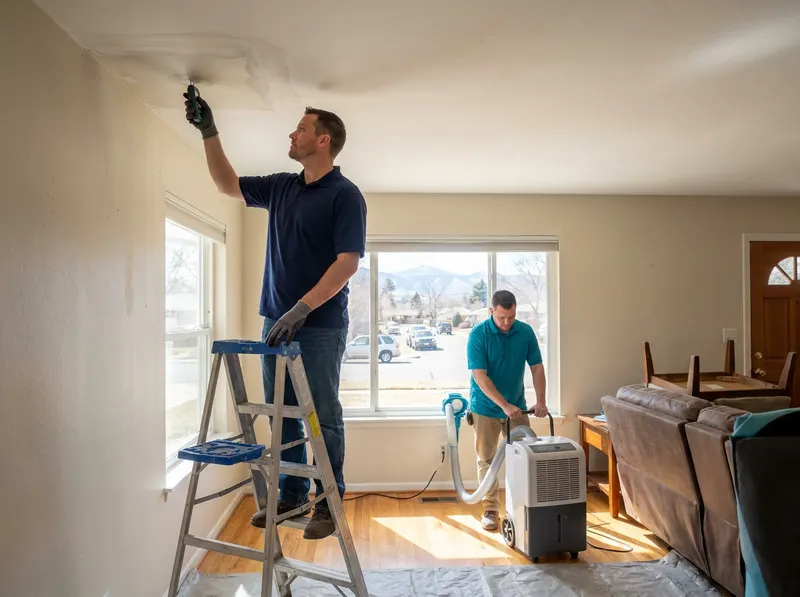
A brown ring or bubbling paint on a ceiling almost always means water sat in the cavity above it. Ceiling leak repair separates into two questions: where the water enters, and what it damaged on the way down. In…
A brown ring or bubbling paint on a ceiling almost always means water sat in the cavity above it. Ceiling leak repair separates into two questions: where the water enters, and what it damaged on the way down. In Denver, the two most common sources are winter ice dams on older bungalows in Wash Park and Berkeley, where snow melts and refreezes at the eave and backs up under the shingles, and second-floor bathroom supply lines and shower pans in the newer builds around Stapleton and Green Valley Ranch. A stain directly below an upstairs bathroom points to plumbing; a stain along an exterior wall or near a roof valley points to the roof envelope.
Drying comes before rebuilding. Wet drywall holds moisture for days, and painting over a damp cavity traps it, the stain returns within weeks and mold can start on the paper facing within 24-48 hours. A moisture meter confirms the framing and remaining drywall have dropped below roughly 16% before any patch goes up. For a saturated section, the wet drywall is cut out in a clean rectangle, wet blown-in or batt insulation is removed, and air movers run in the cavity until readings are stable. A stain from a one-time leak that has already dried may only need a stain-blocking primer and repaint rather than a full cut-out.
Decision guidance depends on how much of the ceiling is affected. If a single water spot under 2 feet across is dry and the source is fixed, a primer-and-paint touch-up is the right call and stays at the low end of the range. If the drywall sags, feels soft, or a section has fallen, the wet material must be cut out and replaced, which is a mid-range job. If the ceiling joists show rot or the leak ran for weeks, framing repair enters the picture and the cost climbs. Popcorn and knockdown textures common in Denver homes built before the 1990s require texture matching, which adds labor to blend the patch into the existing surface. Note that ceiling and water leak repair fixes the water damage and, where it is a plumbing or roof-flashing issue, the source, but a full roof replacement or major re-plumb is a separate scope handled by a roofing or plumbing trade.
Timing in Denver follows the seasons: ice-dam ceiling stains spike in January and February after freeze-thaw cycles, while plumbing leaks run year-round. Because homes here are heated dry through winter, a small ceiling stain can look stable for months and then reappear during the next melt, which is why tracing the source matters as much as the cosmetic patch.
Every job gets a firm, written price after a free on-site visit.
Tell us about your ceiling & water leak repair job in Denver and we'll send a clear, written quote, usually the same day.