Crawl Space Water Removal & Drying Denver
Pump-out, structural drying, vapor barrier and mold prevention. Ballpark pricing; exact confirmed on-si
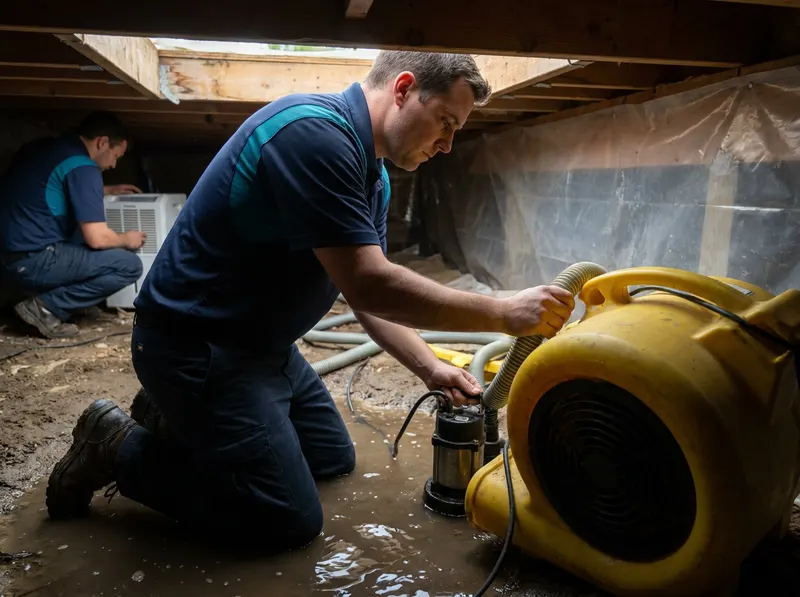
- Included: standing-water pump-out, soil and surface extraction, removal of ruined batt insulation, structural drying to under 16% wood moisture, and antimicrobial application on framing.
- Speed: pump-out usually finishes within 2 to 4 hours; full structural drying runs 3 to 5 days depending on how far below grade the space sits.
- Cost: roughly $600 to $3,500 in the Denver market, a ballpark confirmed exactly after an on-site inspection.
- What we remove: saturated fiberglass insulation, warped vapor barrier, and any drywall or subfloor delaminated by prolonged contact.
- To book: call to schedule a free on-site crawl space inspection, or text a photo of the standing water for an initial estimate.
A Denver crawl space fills with water for three common reasons: a failed sump pump during spring melt off the foothills, a cracked supply line under an older bungalow in Congress Park or Baker, or groundwater pushing up through a dirt floor after heavy runoff along the South Platte. Because most metro-area crawl spaces are dirt or thin concrete with a plastic vapor barrier, water saturates the soil and wicks into floor joists long after the visible pool is gone, which is why pump-out alone does not finish the job.
The work runs in a set order. First, a submersible pump clears standing water, then a truck-mounted or portable extractor pulls moisture from the soil surface and any pooled areas. Second, ruined batt insulation and torn vapor barrier come out, since wet fiberglass holds water against the joists and never dries in place. Third, low-profile air movers and a dehumidifier, an LGR (low-grain refrigerant) unit for the tight clearance, run until a pin moisture meter reads the framing below 16%, the point at which mold growth stalls. Homes near Sloan's Lake and Berkeley with high water tables often need the dehumidifier left in place an extra day.
Crawl space drying differs from a finished-basement job in access and airflow. A 24-inch clearance means technicians work on their backs, and standard tall dehumidifiers do not fit, so the drying equipment and the day count both change. A dirt-floor crawl space also releases moisture from the ground itself, so a fresh 6-mil vapor barrier is usually reinstalled after drying to stop the space re-saturating. If the water sat more than 48 hours, or if sewage backed up through a floor drain, the scope expands to include disinfection and, in some homes, sistering or replacing a joist that lost structural moisture strength.
A single-room water intrusion under a small ranch differs sharply from a whole-house crawl space flood: the first is a one-pump, two-day dry-out; the second may need multiple air movers and staged extraction. If only one corner near a burst hose bib is wet, targeted drying keeps cost low; if standing water covers the full footprint under a Denver two-story, plan for full insulation removal and a longer dehumidifier run. Antimicrobial treatment on the joists is standard whenever organic material stayed wet, because Denver's dry surface air masks moisture still trapped in the wood.
Crawl Space Water Removal & Drying cost in Denver
Every job gets a firm, written price after a free on-site visit.
Common questions
How long does crawl space drying take in Denver?
Does wet insulation need to come out of a Denver crawl space?
What causes crawl space flooding in Denver homes?
Do you replace the vapor barrier after drying a Denver crawl space?
How much does crawl space water removal cost in Denver?
Get started today
Tell us about your crawl space water removal & drying job in Denver and we'll send a clear, written quote, usually the same day.