Emergency Water Extraction Denver
Extraction is not the same as drying, and confusing the two costs money. Water extraction removes the liquid water you can see and standing water hidden in carpet pad; structural drying with air movers and…
Extraction is not the same as drying, and confusing the two costs money. Water extraction removes the liquid water you can see and standing water hidden in carpet pad; structural drying with air movers and…
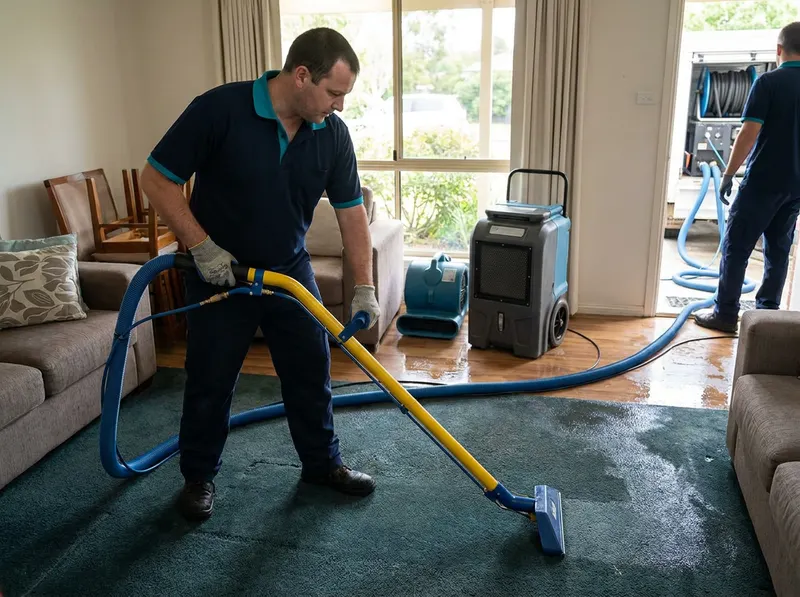
Extraction is not the same as drying, and confusing the two costs money. Water extraction removes the liquid water you can see and standing water hidden in carpet pad; structural drying with air movers and dehumidifiers happens after, over 3-5 days, to pull moisture out of drywall, framing, and subfloor. A wet-vac at a hardware store lifts surface water but leaves gallons trapped in the pad, which is why a truck-mounted unit pulling 200+ inches of water lift is used on a real flood.
Denver's specific failures drive most calls. Sewer backups hit older gravity-fed lines in Baker, Congress Park, and West Highland after heavy summer thunderstorms overwhelm the storm system. Frozen and burst supply lines are common in unheated crawl spaces and garages across Green Valley Ranch and Montbello during January cold snaps, when overnight lows sit in the single digits. Basement seepage rises in low-lying areas near the South Platte River and Cherry Creek during spring snowmelt. Denver's high-desert climate helps the drying phase that follows, since ambient humidity here often sits below 40%, but the water still has to come out first.
Contaminated water changes the job. Category 1 is clean supply water and extracts straight away. Category 2 (gray water from a dishwasher or washing machine) and Category 3 (sewage or river backup) require extraction plus removal of porous materials that touched it, per IICRC S500 water-restoration standards. If a Denver basement floods with sewer water, the carpet pad and drywall base are pulled and disposed of, not dried in place. The crew documents moisture readings and category during the walkthrough so the insurance claim reflects what was actually there.
Extraction fits the moment water is standing or the carpet squishes underfoot. If the surface is already only damp and no free water remains, the job skips straight to drying and moisture monitoring instead. The trade-off is speed against cost: acting within the first 24-48 hours keeps water in the Category 1 range and limits removal to pad only, while waiting past 72 hours lets mold begin and forces demolition of drywall and cabinetry that could have been saved.
Every job gets a firm, written price after a free on-site visit.
Tell us about your emergency water extraction job in Denver and we'll send a clear, written quote, usually the same day.